
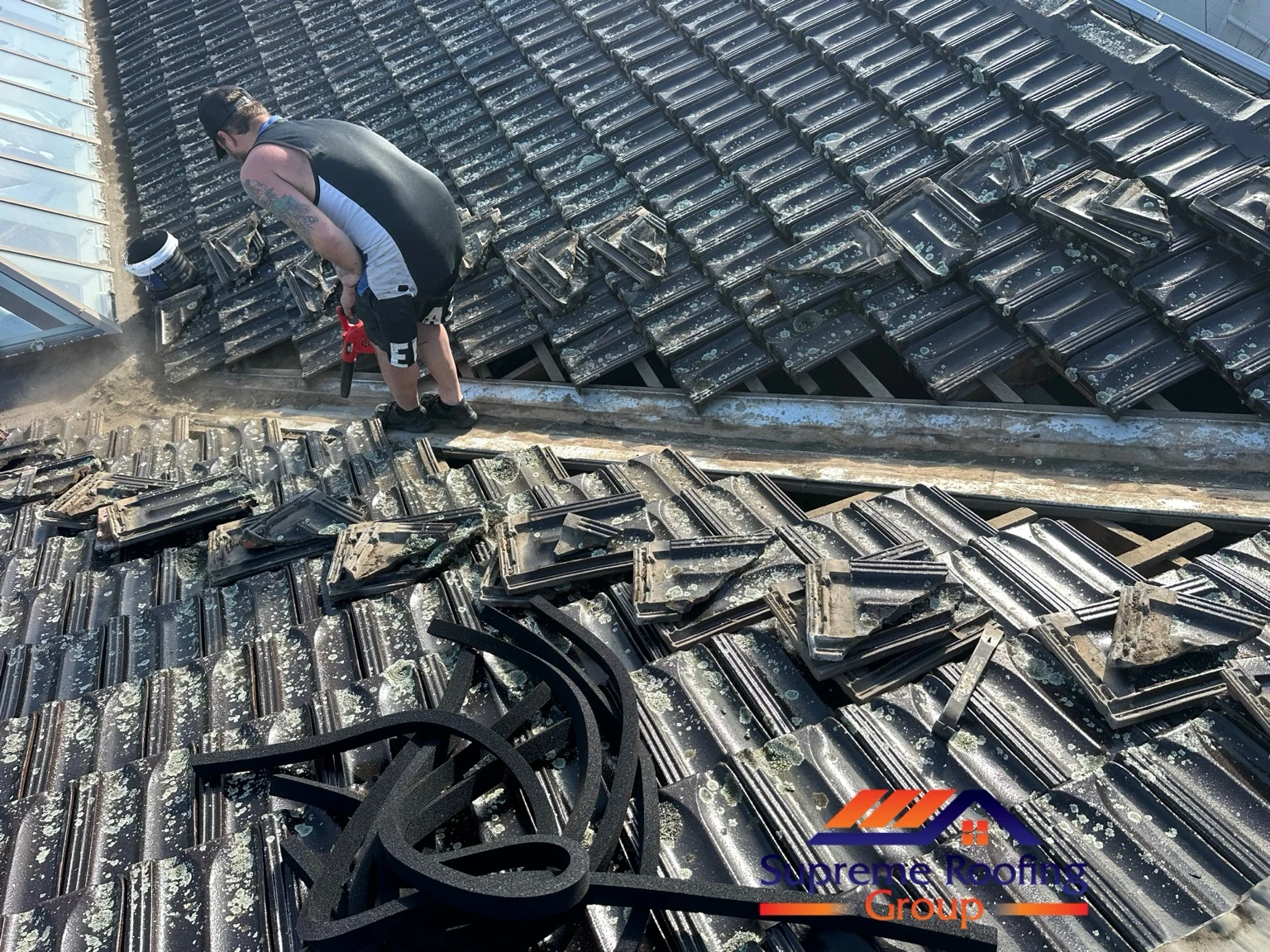
Corrosion and failed laps
Older valley metal can corrode, perforate or fail at overlaps. Rust staining and previous sealant patches may indicate a history of water movement but do not prove the only fault.
- Corroded metal
- Failed or short laps
- Repeated temporary sealant patches
Blocked flow paths
Leaves, moss, tile fragments and accumulated sediment can restrict the valley and force water sideways beneath tile edges during intense rain.
- Organic debris
- Broken tile fragments
- Restricted discharge into the gutter
Tile cuts and valley seals
Poorly cut, unsupported or displaced tiles can direct water outside the intended channel. Deteriorated valley seals may also allow wind-driven water or debris into vulnerable edges.
- Uneven tile cut line
- Loose or unsupported edge tiles
- Missing or deteriorated valley seals
Repair or replacement
Cleaning or a local repair may suit a sound valley with a limited fault. Corroded metal, poor layout or widespread defects may justify replacement and resetting adjacent tiles.
- Inspect the full run
- Check the top lap and lower discharge
- Record adjacent tile work in the quote
See this on a Melbourne roof
These completed projects show how the work changes with the roof material and the faults found.
- Clayton valley and storm-seal replacement
The project records exposed valley metal, its replacement and new storm seals, with rebedding and repointing of disturbed ridge capping.
- Donvale repointing and valley storm seals
Ridge and hip capping was repointed, old valley mortar was removed and storm seals were installed, and broken tiles were replaced. The existing tiled roof and metal valleys were retained.