
What changes the repair price
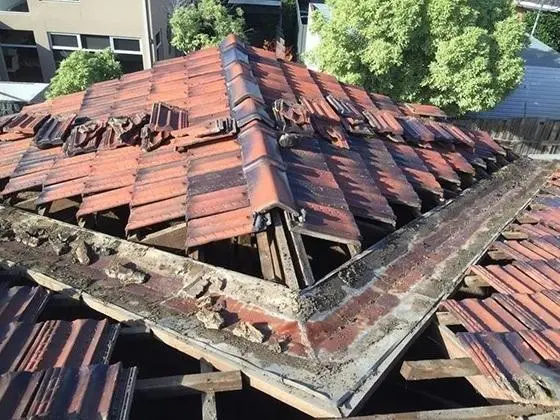
Roof height, pitch, safe access, material, tile availability and the location of the fault all affect labour and materials. A small visible stain can still require careful tracing across several roof junctions.
- Roof height and pitch
- Access and safety requirements
- Cement or terracotta tile profile
- Location and extent of the fault
Common repair scopes
A quote may cover broken tiles, ridge bedding and pointing, valleys, apron or lead flashing, skylight details, penetrations or drainage faults. These are different jobs and should not be hidden under one vague line item.
- Tile replacement
- Rebedding and repointing
- Valley repair or replacement
- Flashing and penetration work
Why diagnosis matters
Water can travel before it appears inside. A cheap patch placed directly above the ceiling mark may miss the entry point and make repeated repairs more expensive.
- Record when the leak appears
- Inspect adjoining roof details
- Ask what evidence supports the proposed repair
How to compare quotations
Check the exact roof area, materials, access allowance, clean-up, exclusions and workmanship coverage. A quote is more useful when another roofer can understand exactly what is being priced.
- Compare like-for-like scope
- Confirm GST and exclusions
- Check the written warranty
See this on a Melbourne roof
These completed projects show how the work changes with the roof material and the faults found.
- Canterbury apron-flashing replacement
Deteriorated apron flashings were replaced where the terracotta tiles meet dormer walls and window junctions.
- Clayton valley and storm-seal replacement
The project records exposed valley metal, its replacement and new storm seals, with rebedding and repointing of disturbed ridge capping.